

Powerful Subject Meetings - The architects of expert delivery
Subject leaders should be the architect of expertise within their team. How do we nurture them and make subject meetings the powerful levers they should be?


There is something satisfying about a completed meeting agenda.
Every item has been covered. The deadlines have been shared. The examination arrangements have been clarified. Someone has reminded everyone where the resources are stored. The meeting ends on time and nobody can claim that it was unproductive.
But would tomorrow’s teaching be any better because the meeting took place?
That is a harder question.
Subject teams will always need time to organise themselves. Schools are complex places, and departments cannot function without communication, coordination and the occasional practical decision. Yet there is a danger that these necessary tasks gradually consume the only regular opportunity teachers have to think deeply together about their subject.
Our trust has committed to giving every subject a fortnightly ‘Subject Development Meeting’ built into the timetable (not afterschool sessions). We believe subject development is a powerful lever to improving the quality of teaching. Having worked collaboratively with our leaders to shape their purpose, we have identified three central activities:
collaborative curriculum planning
intellectual preparation for upcoming content
rehearsal of subject-specific pedagogy.
A subject development meeting should not simply help a department to function. It should help teachers become more expert in their subject and it’s delivery to learners.
What is distinctive about subject development?
Teachers develop through many different professional experiences.
Whole-school professional development can introduce evidence-informed approaches to questioning, modelling, checking for understanding or managing behaviour. Briefings can establish shared expectations. Coaching and drop-ins can support teachers to practise specific elements of classroom practice. We use StepLab at CELT to support powerful group PD and providing high quality drop-in feedback.
But none of these can replace the equally important role that subject development plays.
A whole-school group professional development session can explore the principles of an effective explanation. It cannot allow teachers to grapple with how best to explain why dividing by a fraction is equivalent to multiplying by its reciprocal.
It can introduce metacognitive modelling. It cannot determine how an historian should think aloud while evaluating the provenance of a source, or how an English teacher should model the interpretation of an ambiguous metaphor.
It can describe the value of identifying misconceptions. It cannot anticipate why learners confuse current and voltage, believe that larger denominators create larger fractions, or assume that every first-person narrator is reliable.
Those questions belong to subjects.
Shulman’s work in the 1980s drew attention to the distinction between knowing a subject, knowing pedagogical approaches and knowing how to teach that specific subject well to others.
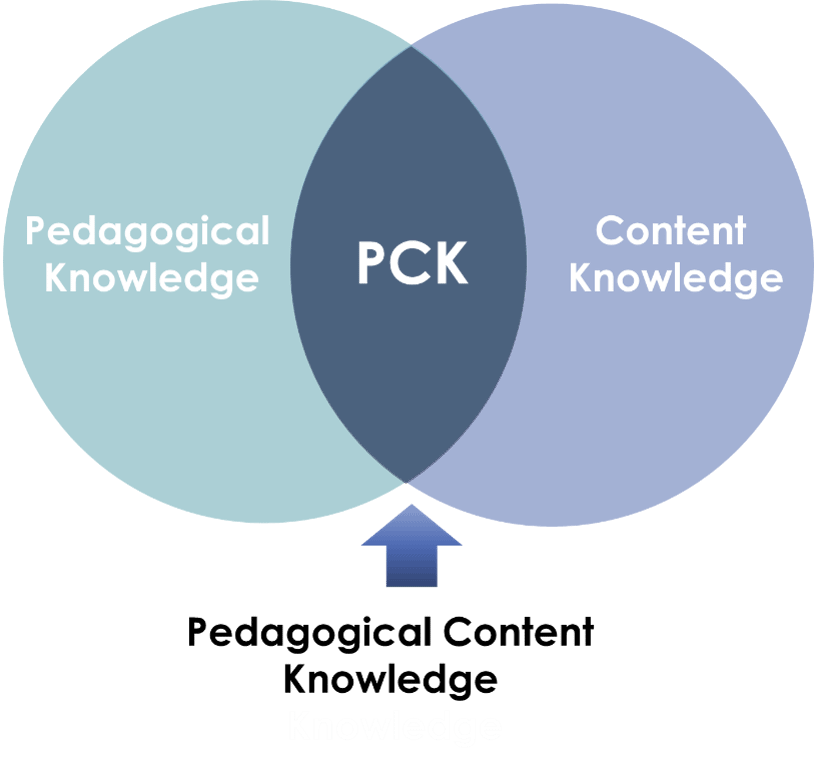
Our guidance for subject meetings therefore identifies two main areas for development:
Content knowledge, meaning an understanding of the curriculum and the subject matter underpinning it.
Pedagogical content knowledge, meaning an understanding of the most effective ways to teach the specific content within that curriculum
The other aspect of general pedagogy is developed through our Learning Chronicles (read more here), group PD, StepLab Drop-in steps and coaching.
General pedagogy is not the main work of a subject meeting
This does not mean general pedagogy has no place in subject development meetings.
There may be occasions when a whole-school priority needs to be translated into subject practice. A subject team might discuss what an agreed approach to retrieval should look like in geography, or how a whole-school routine for independent practice should be enacted in art.
There may also be moments of rapid school improvement when deliberate rehearsal of a general routine is necessary, such as practising a behavioural routine or a shared classroom set play.
However, this should not become the dominant use of subject time.
Our trust guidance suggests that, within a typical session, no more than around 20 minutes should be devoted to the development of general pedagogy, with the majority of the meeting, around 50 minutes, focused on curriculum content and pedagogical content knowledge.
The proportions matter because they protect the distinctive purpose of the meeting.
A subject development meeting should not simply repeat whole-school professional development in a smaller room. Its value lies in helping teachers understand how general principles of effective teaching apply to the particular content they are about to teach - the intersection of pedagogy and content.
Intellectual preparation: understanding what comes next
A lawyer does not walk into court armed only with a general knowledge of the law.
They may understand the relevant legislation, legal principles and previous cases, but that knowledge alone is not enough. They must study the particular case in front of them. They test an argument, refine the phrasing of a difficult point and practise how they will respond to challenge. They do not rehearse because they lack expertise. They rehearse because expertise is strengthened when important moments are considered before they happen under pressure.
Teachers can do the same within a subject meeting. They can rehearse an explanation, refine a metacognitive model, compare examples and anticipate how they will respond when a misconception emerges.
Teachers bring their knowledge of the subject and the intended curriculum. They study the upcoming sequence, clarify the essential knowledge and consider why it has been ordered in a particular way. They identify the difficult concepts, anticipate misconceptions and decide which explanations, examples and representations will make the content most comprehensible.
But teachers must also prepare for the particular learners who will encounter that curriculum. A teacher may teach the same curriculum to two different classes, but the intellectual preparation should not be identical. One class may have secure prior knowledge, while another may require key ideas to be retrieved and strengthened. Particular learners may need vocabulary introduced more explicitly, a representation clarified, or a scaffold planned and then carefully faded.
The curriculum remains ambitious. The intended knowledge does not change. But, like the lawyer preparing a case, the teacher must consider how the content can be made accessible and convincing for the particular people in front of them.
A lawyer would not enter court having merely read the case file.
A teacher should not enter the classroom having merely opened the resources.
So what should an effective subject meeting include?
At our trust we have developed a suite of strategies to support the delivery of subject team meetings.
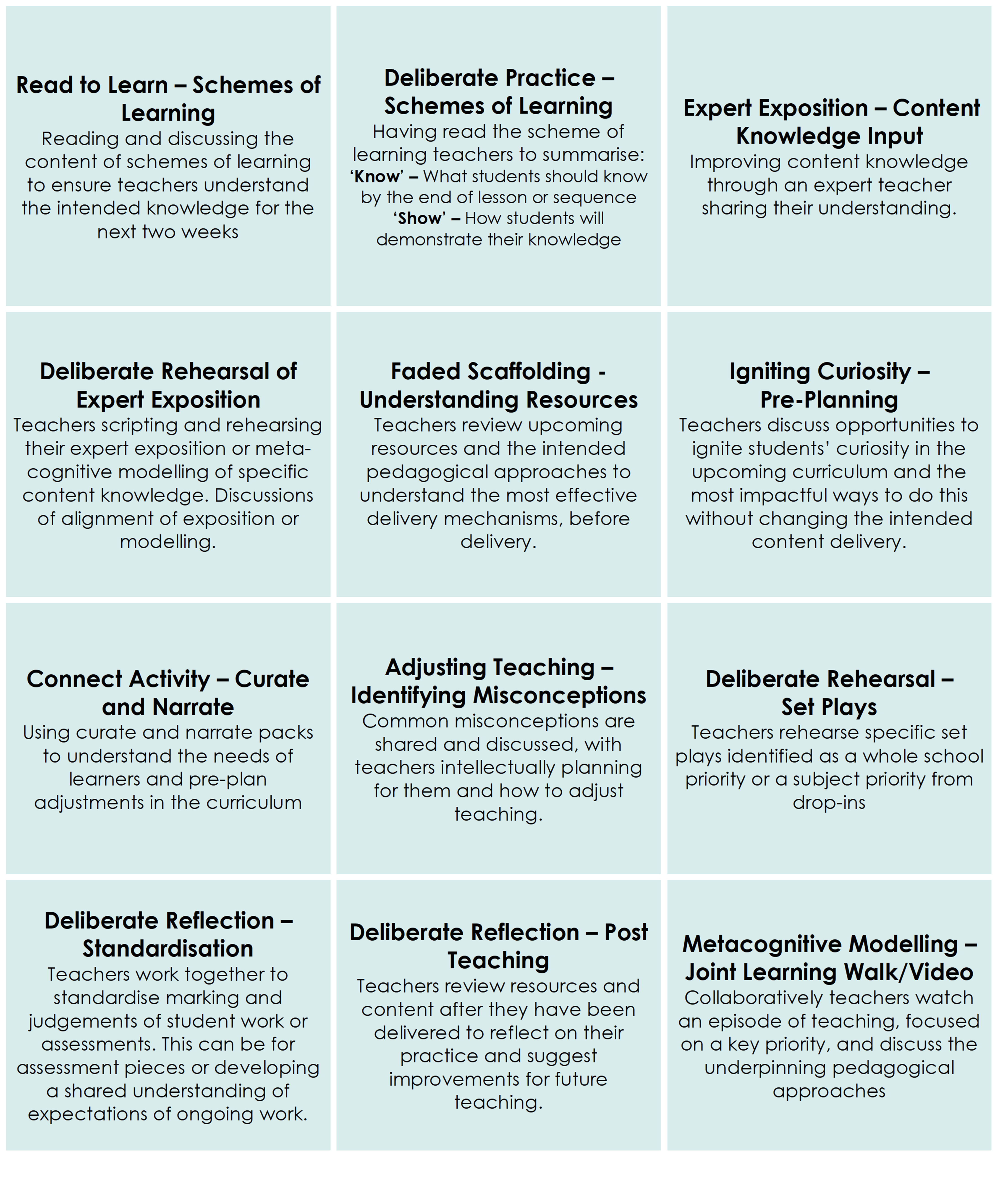
We have also begun a process of filming examples to share with leaders. Just like modelling great teaching, we should also model great meetings.
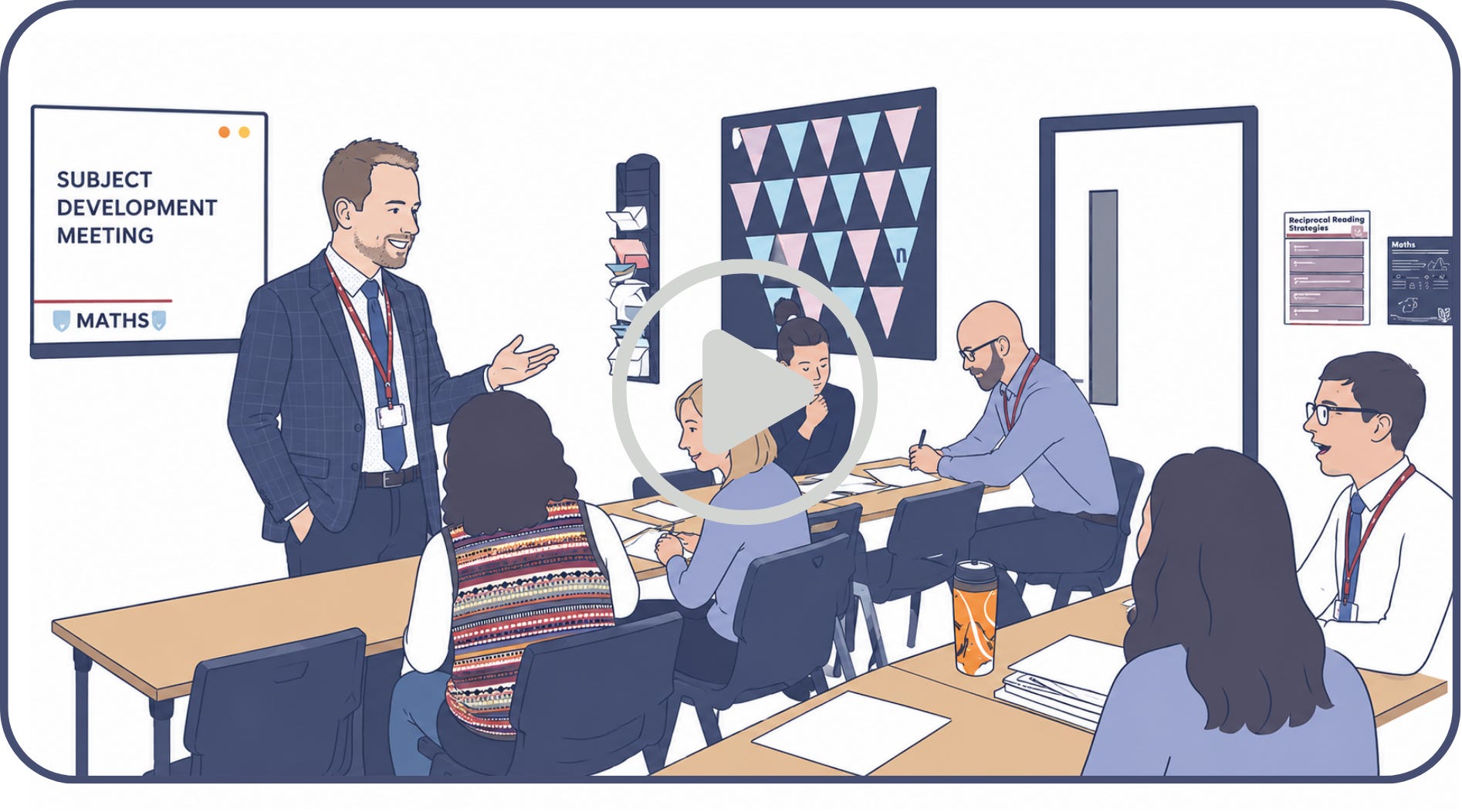
Subject development meetings are among the few regular opportunities teachers have to gather as subject specialists and think deeply about the curriculum.
That time is too valuable to become dominated by notices, logistics or generic discussion.
At their best, subject meetings bring the curriculum to life before it reaches the classroom.