How do we learn? A simple cognitive science-based approach

There is a particular kind of disappointment that most teachers know well.
You teach something well. You explain it clearly. The learners seem to understand it. They answer questions, complete the task, perhaps even leave the lesson with a reasonable degree of confidence.
Then, a few days later, you return to it… and it has gone.
Not completely, perhaps. There are traces. Fragments. Familiar words. A vague sense that they have “done this before”. But the thing you thought had been learned has not yet become secure.
That gap between teaching and learning is where this model begins. When I am fortunate to see great teaching, it always achieves the same thing, it makes learners think. That sounds obvious, but it is surprisingly easy to forget.
Attention is the start - The narrower the better
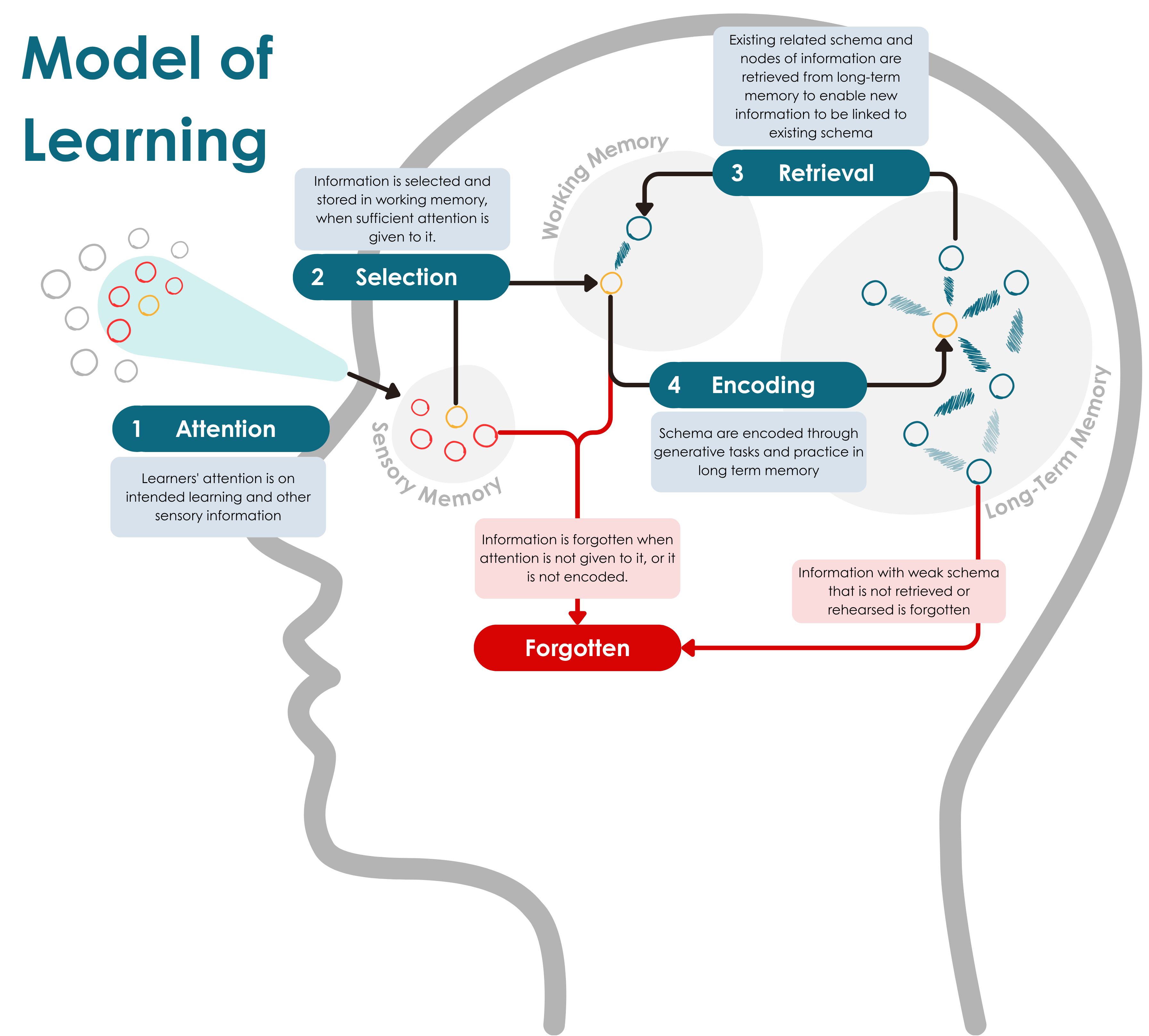
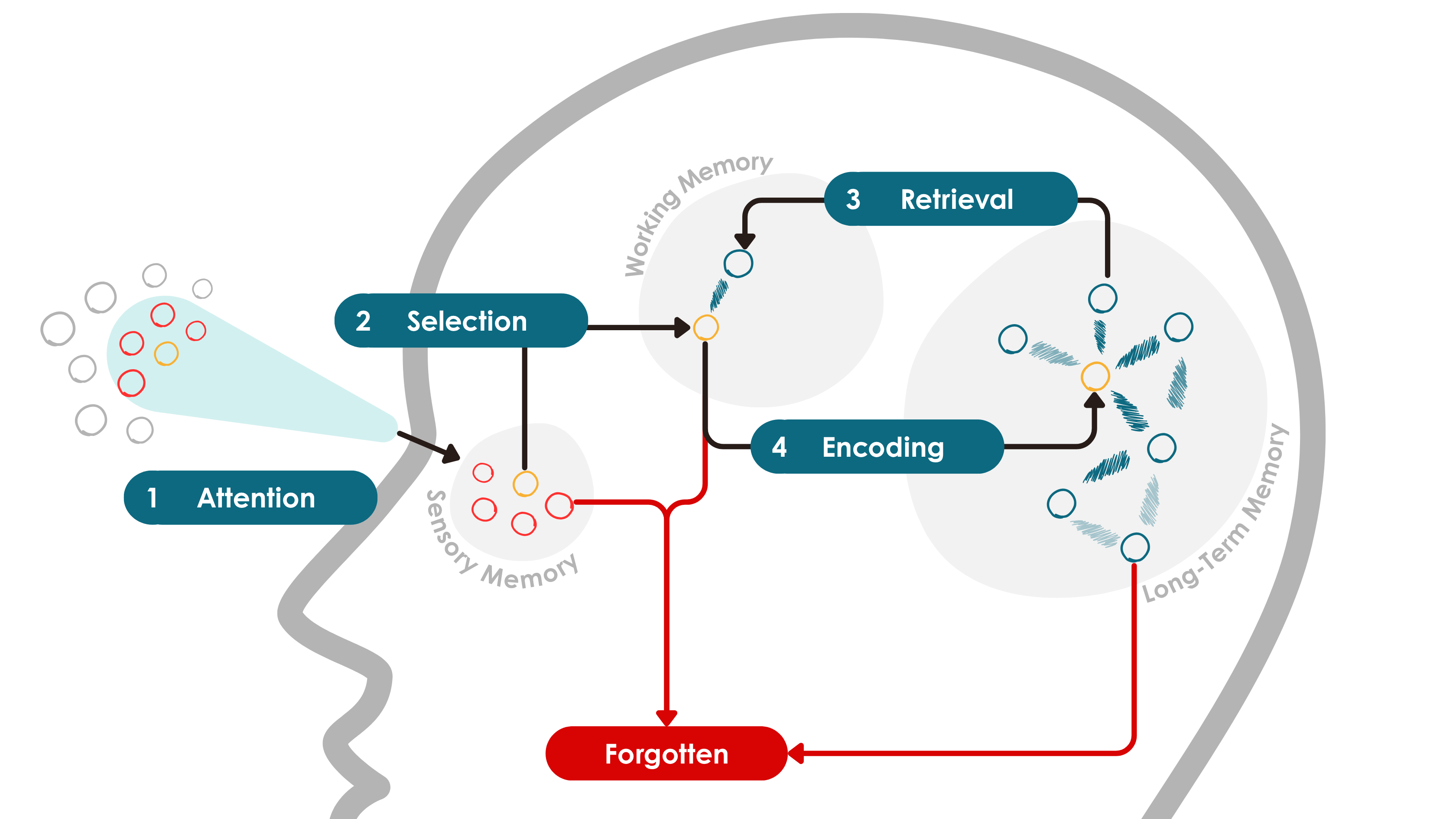
Before anything can be learned, it has to be noticed. Learners are surrounded by competing information all the time: the teacher’s explanation, the slide, the task sheet, the noise in the room, the conversation nearby, the worry they brought with them into the lesson, the thing they are excited to do when the get home and so on. Only some of that information gets attended to.
There are two things we need to consider:
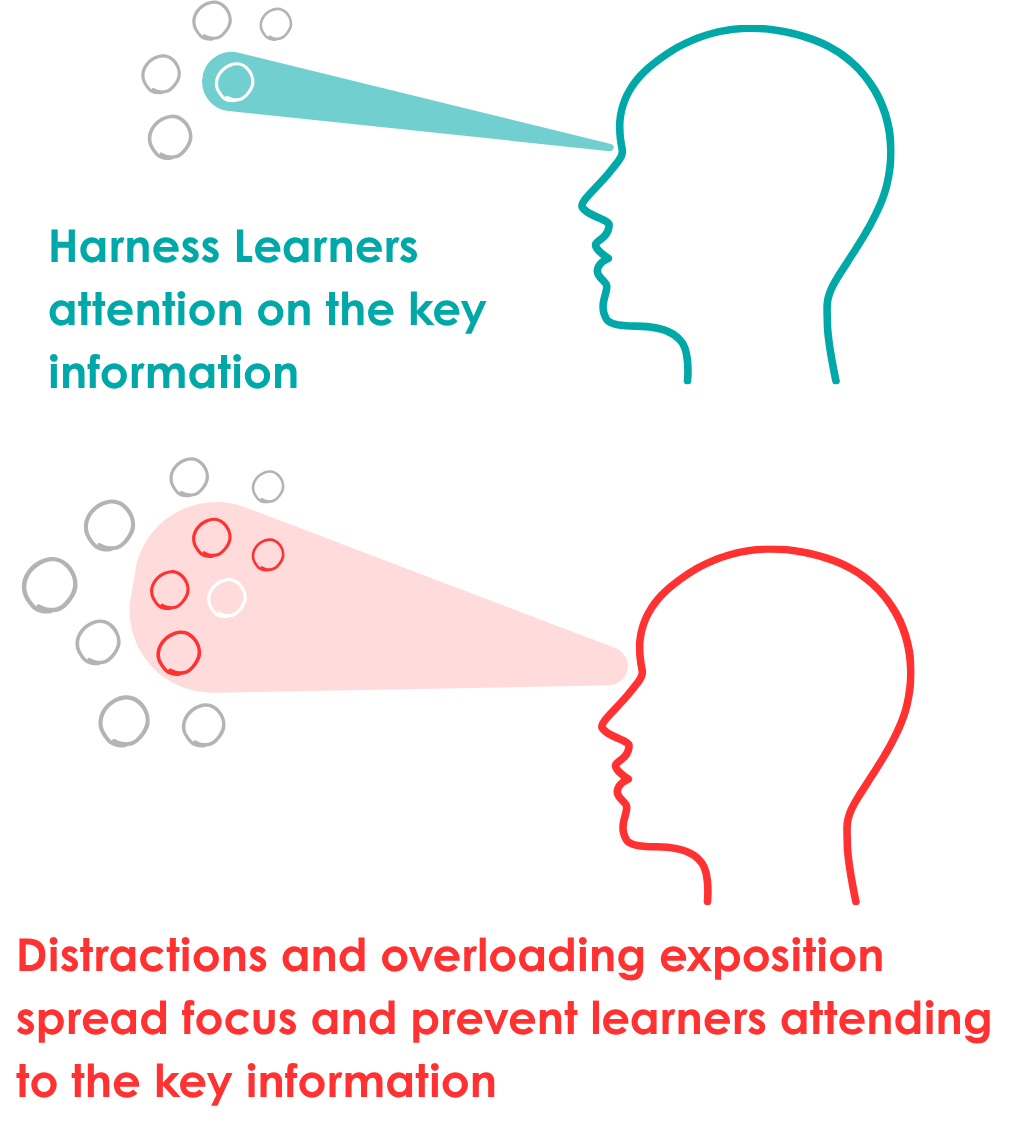
Are learners distracted by extraneous information?
Are they paying attention meaningfully to the key information?
This is why attention matters so much. Not in a narrow “eyes front” sense, but in a deeper cognitive sense. What are learners actually thinking about? What is occupying their working memory? Is their attention on the idea we want them to learn, or on something adjacent to it?
That’s why harnessing learners’ attention is more than sitting straight and looking at the teacher. Attention is a cognitive process, but we often confuse it with a proxy of physical presentation.
That distinction matters. Learners can appear focused and still be thinking about the wrong thing.
Then learners select - To manage working memory
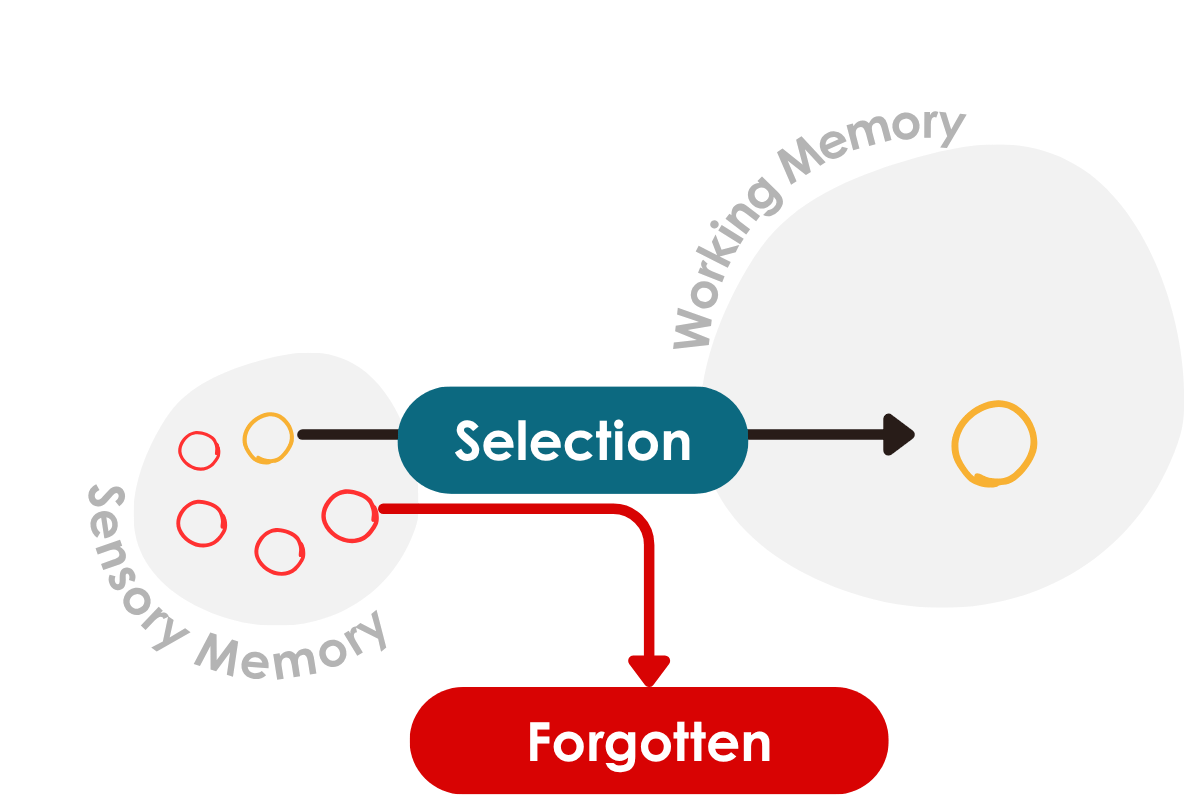
Once attention is secured, learners then have to select what matters and transfer from sensory to working memory.
Working memory is limited. It cannot hold everything, so learners need help identifying what is important, what is connected, and what needs to be retained. This is one of the reasons expert teaching is so powerful. Teachers do not simply present information; they shape attention and selection. They signal significance. They draw out the key idea. They reduce noise. But often teachers add fluff to exposition in an attempt to increase engagement, in reality they reduce the quality of selection. Balancing inspiration and judicious exposition is the craft of an expert teacher.
Selective retrieval of prior learning into working memory
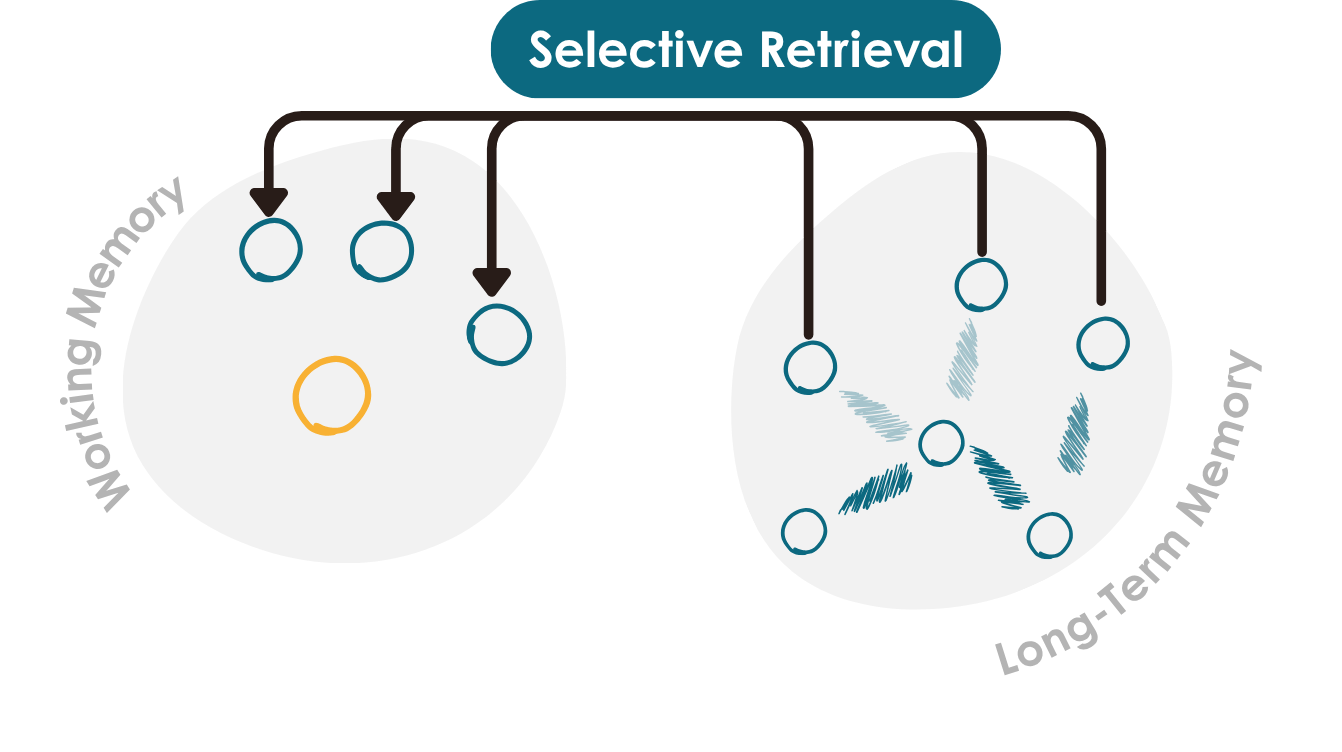
For learning to occur it has to connect new information to existing knowledge in the learner’s working memory. That is why retrieval is so important. Retrieval is not something that is done at the start of lessons in a routine rubric of compliance, that someone with a clipboard checks, it is a cognitive process designed to ensure working memory has relevant prior learning in it, ready to build schema.
Great teaching facilities learners retrieving required prior knowledge. It brings useful schema judiciously back into working memory. Working memory is limited and managing load here is key.
This is where things often go wrong. If the prior knowledge is secure, the new idea can make sense quite quickly. If the prior knowledge is weak, fragmented or missing, the new information can feel disconnected. Learners struggle to understand the information, or it is not retained and embedded.
It means we have to think carefully about what needs to be brought back before we move forward. What vocabulary needs revisiting? What concepts need reactivating? What earlier learning is this new learning depending on?
No learning has happened yet - more is required
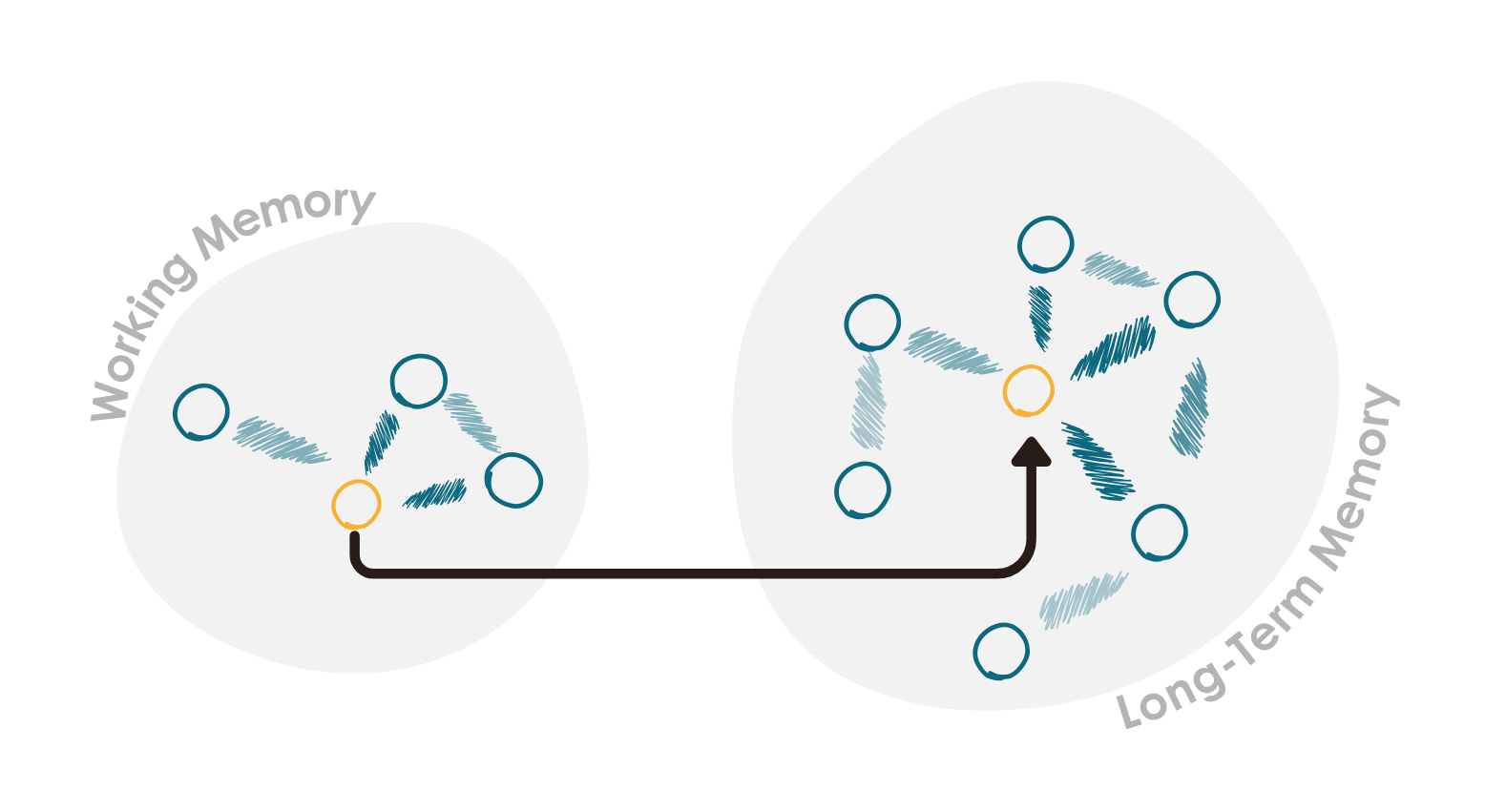
When information is working memory - momentary performance can occur, but that isn’t learning. If you have ever taught a lesson where learners were able to answer all the carefully scaffolded questions and yet next lesson they can’t - then they didn’t encode their learning deeply. Learners need to do something independently with what they have encountered. They need to organise it, practise it, explain it, apply it, compare it, test it, use it. They need to think about it!
But the important word here is independently. This is often confused with silent working or completing highly scaffolded tasks by themselves.
Activity on its own does not guarantee learning. A task can be engaging and still leave very little behind. What matters is the thinking the task demands. Does it require learners to process the intended knowledge? Does it strengthen the right connections? Does it help build a more secure schema? Does it challenge and confuse them? Does it flip information processing?
Only then, information is genuinely encoded into long-term memory schema.
The uncomfortable truth is that forgetting is the default
Information can be lost because it was never properly attended to. It can be lost because learners selected the wrong thing. It can be lost because it did not connect to prior knowledge. It can be lost because it was not revisited, retrieved or encoded strongly enough.
If something really matters, it cannot appear once and then vanish from the curriculum. It needs to come back. Not as endless repetition, but as thoughtful revisiting: retrieval, practice, application, questioning, explanation, connection.
This has implications for how we deliver lessons, but also for how we design curriculum.
A curriculum is not just a sequence of content. It is a memory architecture. It determines what learners meet, when they meet it, how often they return to it, and how securely it connects with everything else they know.
It shifts the question from “Have I taught it?” to “Have they thought about it well enough?”
That is a much harder question. But it is also the question that gets us closer to learning.
So when we are planning, it may be worth asking:
What do I need learners to attend to?
What must they select as important?
What prior knowledge needs to be retrieved?
What will help them encode this into long-term memory?
Because in the end, learning is not what is said in the room. It is what changes in long-term memory and that does not happen by chance.